Category: News

News

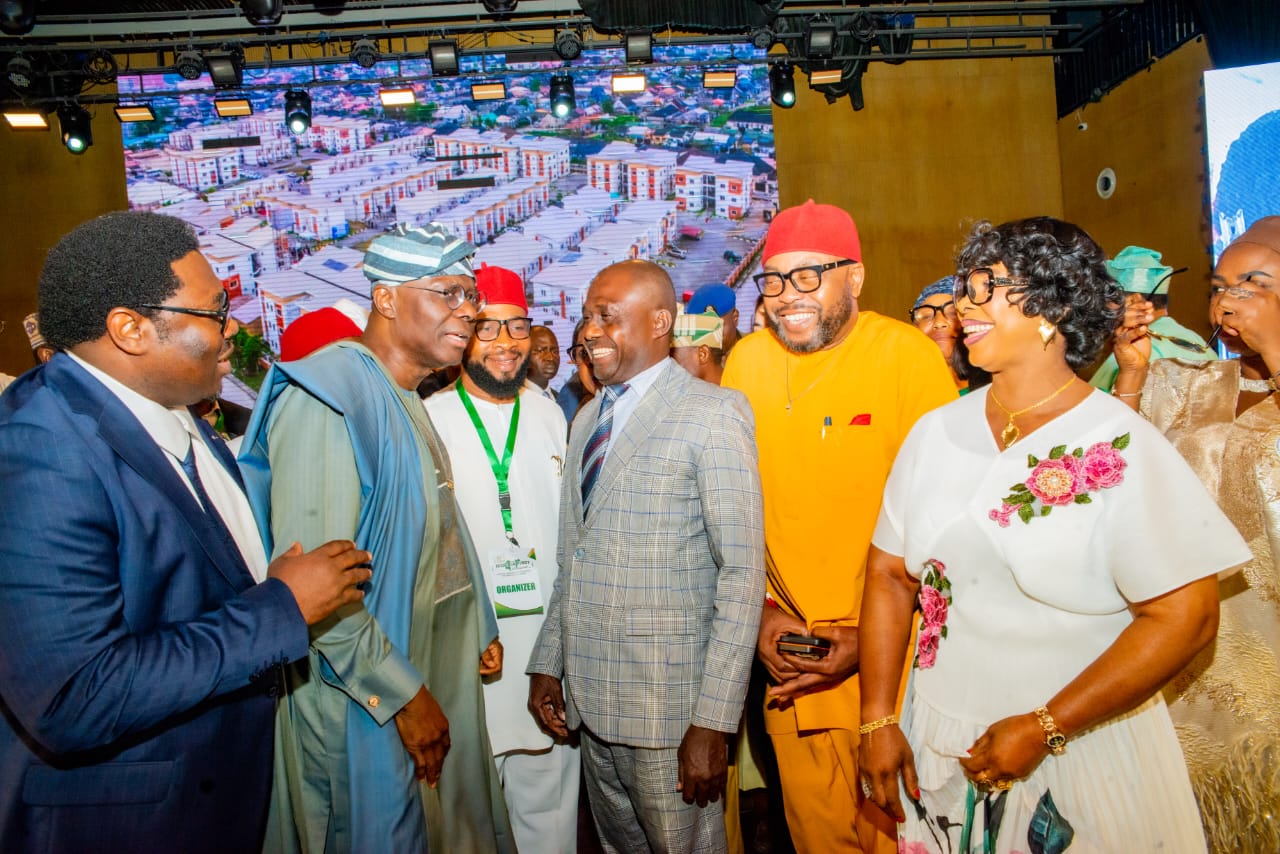
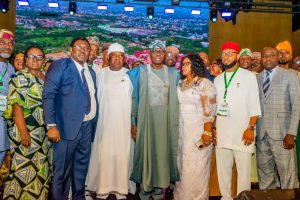
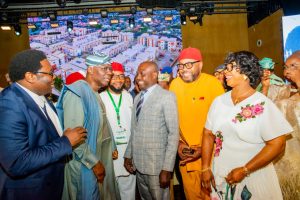
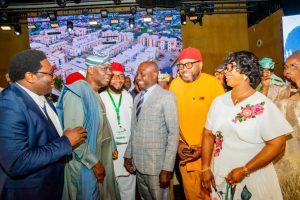
  • His Excellency Sen. George Akume (SGF) representing Mr. President and Excellency Gov. Sanwo Olu of Lagos state with national leadership of Accredited Civil Society Organizations, during the Southern Civil Society Summit, Lagos 2026.

    His Excellency Sen. George Akume (SGF) representing Mr. President and Excellency Gov. Sanwo Olu of Lagos state with national leadership of Accredited Civil Society Organizations, during the Southern Civil Society Summit, Lagos 2026.

    15-POINT RESOLUTION
    SOUTHERN CIVIL SOCIETY ORGANISATIONS SUMMIT 2026
    Lagos, 8th July 2026
    Theme: “NIGERIA FIRST”

    We, the Accredited Civil Society Organisations and Community-Based Organisations under the umbrella of CSCHEI, having deliberated on issues of national unity, security, governance, development, and citizen welfare, hereby resolve as follows:

    1. National Unity and Cohesion:
    We commit to promoting peace, tolerance, and national unity across the Southern States and Nigeria at large, by rejecting hate speech, divisive narratives, and actions that undermine nationhood.

    2. Support for Security Architecture :
    We call for the strengthening and adequate resourcing of the Judiciary, Intelligence, and Security Agencies to ensure proactive crime prevention, justice delivery, and protection of lives and property.

    3. Food Security and Agricultural Transformation :
    We urge government at all levels to prioritize sustainable agriculture, provide support to smallholder farmers, and implement policies that guarantee food sufficiency and affordability for all citizens.

    4. Acceleration of SDG 2030 Implementation:
    We resolve to align CSO programs with the UN 2030 Agenda and to work with Federal and State MDAs to track, report, and accelerate progress on all 17 SDGs at the grassroots level.

    5. Climate Action and Climate Financing:
    We advocate for increased investment in climate adaptation, renewable energy, and community-based environmental programs, and for transparent access to global climate financing for local communities.

    6. Open, Transparent and Accountable Budgeting:
    We demand the institutionalization of an open budgeting system that ensures citizen participation, transparency in public expenditure, and value for money in project delivery.

    7. Strengthening Democratic Governance:
    We reaffirm our commitment to inclusive governance, the rule of law, and judicial independence as foundations for sustainable democracy and development.

    8. Strategic Partnership Between Government and CSOs:
    We call for the establishment of a structured framework for collaboration between Government and Civil Society as partners in nation building to ensure service delivery reaches the last mile.

    9. Combating Misinformation and Promoting Civic Education:
    We resolve to lead strategic information management by countering fake news and rumours, and by intensifying voter education and civic engagement to strengthen democracy.

    10. Youth Empowerment and Human Capacity Development:
    We urge government and development partners to expand investments in skills acquisition, entrepreneurship, and the Industrial Training Fund to reduce unemployment and empower Nigerian youth.

    11. Strengthening Social Protection Systems:
    We call for the refinement and expansion of social protection and trust-building mechanisms to cushion the impact of economic hardship and restore citizens’ confidence in government.

    12. Support for MSMEs and Economic Inclusion:
    We resolve to work with SMEDAN, BOI, and other agencies to facilitate access to grants, credit, and technical support for MSMEs as drivers of job creation and grassroots economic growth.

    13. Health and Basic Education Delivery:
    We commit to partnering with NPHCDA and UBEC to improve primary healthcare and basic education outcomes, especially in underserved communities across the 460 LGAs of our operational reach.

    14. Data-Driven and Evidence-Based Advocacy:
    We resolve to anchor all CSO interventions on Logic, Science, and Data, and to establish a unified data system for tracking development impact and optimizing donor and government support.

    15.Institutionalization of “Nigeria First” :
    We adopt “Nigeria First” as our guiding ideology. We pledge to reposition Civil Society from confrontation to collaboration, to prioritize national interest above sectional interests, and to serve as a bridge between Government and the people for sustainable national development.

    Adopted this 8th Day of July 2026, at the Southern Civil Society Organisations Summit, Lagos, Nigeria.
  • DID YOU KNOW? Electoral Act 2026 limits courts from entertaining suits on party internal affairs

    DID YOU KNOW? Electoral Act 2026 limits courts from entertaining suits on party internal affairs

    Paste your text here :)For years, Nigerian politicians have turned to the courts to resolve internal party disputes, from leadership tussles to candidate nominations.

    This pattern has shaped electoral outcomes and, at times, destabilised the democratic process.

    However, the Electoral Act 2026 insulates party affairs from judicial interference.

    Section 83 (5) of the Electoral Act 2026 states that “no court in Nigeria shall entertain jurisdiction over any suit or matter about the internal affairs of a political party”.

    Advertisement
    Subsection 6 further stipulates that where such action is brought in negation of the Act, “no interim or interlocutory injunction shall be entertained by the court, but the court shall suspend its ruling and deliver it at the stage of final judgment and shall give accelerated hearing to the matter”.

    As a punishment to deter party members and their lawyers from dragging a political party to court over its internal affairs, the law prescribes heavy financial penalties.

    Section 83 (6) (b) mandates that, at the conclusion of the case, the court must impose a minimum cost of N10 million each on the lawyer who filed the suit and the plaintiff or applicant. It also requires them to cover any costs incurred by the commission, including solicitors’ fees, where it is joined as a party.

    Advertisement
    In section 88(4), the Electoral Act goes further to explicitly bar courts from halting primaries or general elections pending the determination of a suit.

    “Nothing in this section shall empower the courts to stop the holding of primaries or general elections under this Act pending the determination of a suit,” the section reads.

    Members of the opposition coalition at a recent ADC world press conference
    Unfolding events within the African Democratic Congress (ADC) reveal a widening gap between what the law dictates and what is practised.


    On April 1, the Independent National Electoral Commission (INEC) said it would no longer recognise the ADC leadership led by David Mark, following the court of appeal interim ruling, which ordered parties to maintain the status quo ante bellum, the situation before the suit was filed at the federal high court.

    This decision came against the backdrop of a leadership transition that began on July 2, 2025, when Ralph Nwosu, the party’s founder and national chairman, resigned and endorsed an interim leadership headed by Mark after opposition politicians adopted the ADC as their platform to challenge President Bola Tinubu’s re-election in 2027.

    However, the arrangement was challenged by a faction led by Nafiu Bala, the party’s former deputy national chairman.

    Bala insisted he never resigned and argued that he should assume leadership in line with the party’s constitution. The Mark camp, on the other hand, maintained that Bala had been part of the transition process and supported the new leadership.

    What followed was predictable in Nigeria’s political landscape: a wave of litigation.

    He then declared himself party chairman, vowing to go against the Mark leadership in court

    On September 2, 2025, Bala approached a federal high court in Abuja (Suit No. FHC/ABJ/CS/1819/2025), seeking to stop Mark’s team members from parading themselves as party leaders.

    He also sought an order restraining INEC from recognising them and compelling recognition of himself as the acting national chairman.


    He further filed motions seeking to stop the party from holding meetings, congresses, or conventions pending the determination of the suit.

    The motion ex parte was heard on September 4, 2025, and Emeka Nwite, the trial judge, directed that the respondents, including INEC, be put on notice to show cause why the motion ex parte should not be granted.

    Investigative journalism service
    Apparently seeking to stop the suit, INEC, in an affidavit filed on September 12, 2025, asked the court to stay out of the “domestic affairs” of the ADC.

    Ayuba, an assistant executive officer at INEC, deposed to the affidavit to explain why Bala’s application should not be granted.

    “That the Plaintiff’s application is in substance an invitation to this Honourable Court to delve into issues of internal/domestic affairs of 1st Defendant as a political party,” the affidavit reads.

    “That I know as a fact that a Court of record should not dabble into a political question, which remains the exclusive preserve of political parties, which should be allowed to do their thing.”

    SUPREME COURT POSITION ON PARTY AFFAIRS

    Over the years, the supreme court has held that disputes relating to the internal affairs of political parties — including leadership tussles and membership — are not justiciable and fall outside the jurisdiction of courts.

    In a long line of decisions, the apex court ruled that political parties are voluntary associations governed by their own constitutions and that issues arising from their internal management must be resolved within the party.

    In the case of Uba v. Ozigbo (2021), the supreme court made it clear that the nomination of candidates and party decisions are within the exclusive domain of political parties and not for judicial determination.

    In a similar case, Anyanwu v. Emmanuel (2025), the apex court held that disputes over party leadership are internal matters and constitute a no-go area for courts.

    Yet, despite these precedents, political actors continue to seek judicial intervention in intra-party disputes, testing the limits of the law for political advantage.

    NBA: COURTS MUST NOT BE DRAWN INTO PARTIES’ INTERNAL AFFAIRS

    In a statement on April 10, Afam Osigwe, president of the Nigerian Bar Association (NBA), expressed concern over what he described as the increasing interference of courts in the internal affairs of political parties, despite clear provisions of the Electoral Act 2026 barring such actions.

    According to him, this pattern reflects a disregard for statutory provisions and undermines the rule of law.

    The NBA president urged judges to resist interfering in matters clearly barred by law and called for strict adherence to the Electoral Act, adding that the NBA would take disciplinary action against lawyers who file such cases to weaken Nigeria’s democracy.

    Corroborating the NBA’s position, Festus Ogun, a human rights lawyer, said the “mischievous mischaracterisation” of the court of appeal status quo order has set a perilous precedent that must be urgently corrected by INEC.

    Ogun said in the long run, politicians may approach the court over a leadership dispute and somehow find a way to make the court direct the maintenance of the status quo over the subject matter of the dispute


  • POSTPONEMENT OF NATIONWIDE VOTER REVALIDATION EXERCISE

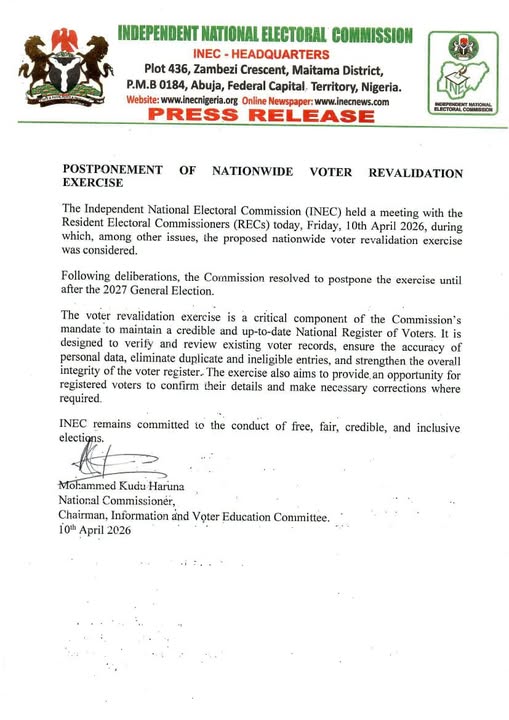
    POSTPONEMENT OF NATIONWIDE VOTER REVALIDATION EXERCISE

    The Independent National Electoral Commission (INEC) held a meeting with the Resident Electoral Commissioners (RECs) today, Friday, 10th April 2026, during which, among other issues, the proposed nationwide voter revalidation exercise was considered.
    Following deliberations, the Commission resolved to postpone the exercise until after the 2027 General Election.
    The voter revalidation exercise is a critical component of the Commission’s mandate to maintain a credible and up-to-date National Register of Voters. It is designed to verify and review existing voter records, ensure the accuracy of personal data, eliminate duplicate and ineligible entries, and strengthen the overall integrity of the voter register. The exercise also aims to provide an opportunity for registered voters to confirm their details and make necessary corrections where required.
    INEC remains committed to the conduct of free, fair, credible, and inclusive elections.
    Mohammed Kudu Haruna
    National Commissioner,
    Chairman, Information and Voter Education Committee.
    10th April 2026
  • Guinea Bissau general election, 2025

    Guinea Bissau general election, 2025

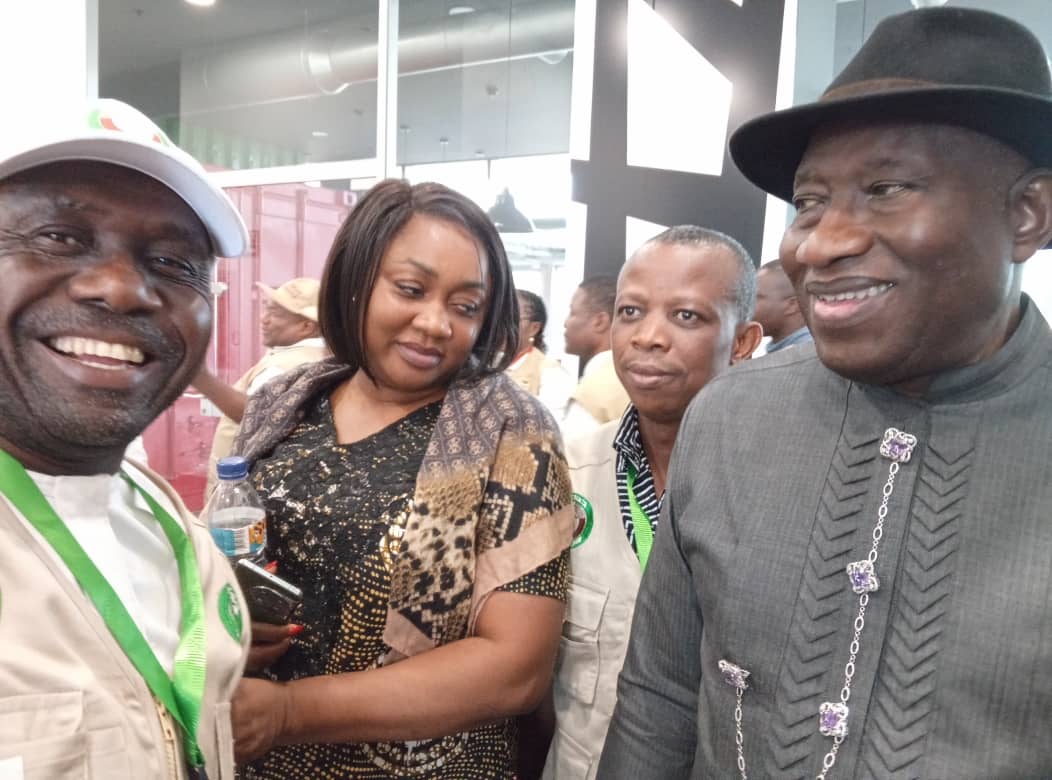
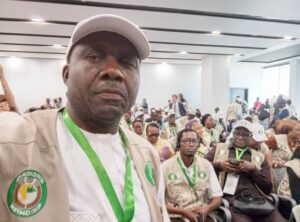
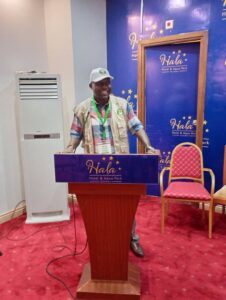
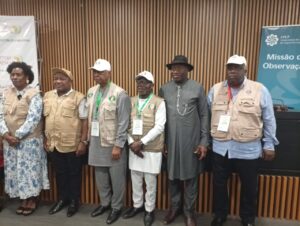
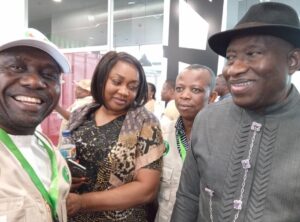
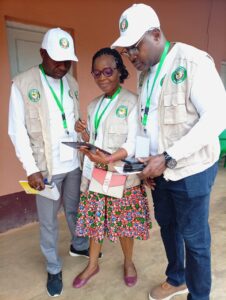
    Covering the Guinea Bissau general election, 2025

  • KALU VICTOR ONYEDIKACHI, Executive Director & Chairman, BOT of, GRASSROOT DEVELOPMENT AND PEACE INITIATIVE, has once again been selected as a delegation of ECOWAS ELECTION OBSERVATION MISSION to Guinea Bissau, 2025

    KALU VICTOR ONYEDIKACHI, Executive Director & Chairman, BOT of, GRASSROOT DEVELOPMENT AND PEACE INITIATIVE, has once again been selected as a delegation of ECOWAS ELECTION OBSERVATION MISSION to Guinea Bissau, 2025

    KALU VICTOR ONYEDIKACHI,
    Executive Director & Chairman, BOT of,
    GRASSROOT DEVELOPMENT AND PEACE INITIATIVE,
    has once again been selected as a delegation of ECOWAS ELECTION OBSERVATION MISSION to Guinea Bissau, 2025.
    The invitation reads;

    Dear Sir,
    You have been selected to be part of the ECOWAS Election Observation Mission (EOM) to the General Elections scheduled for 23 November 2025 in Guinea-Bissau.
    The Mission will be deployed from 19 to 26 November 2025.
    Thank you

    Congratulations sir and do have a safe and peaceful mission.

    Jones Osume,
    Director, ICT & Publicity.